A Valley of Two Halves: The Hidden History of Bevendean
If you stand on Heath Hill Avenue today, looking out over the green slopes, it’s hard to imagine that for nearly a thousand years, this area was almost entirely silent.
For most of us, Bevendean is simply “home”—a place of families, the school run, and the daily commute. But beneath the bricks of the post-war estate lies a much older story. From a Saxon valley worth just £6 to the first community-owned estate pub in the UK, here is a brief look at how our community came to be.
“Beofa’s Valley”
The name Bevendean isn’t just a random collection of sounds. It comes from the Old English for “Beofa’s Valley”. The area was first officially recorded in the Domesday Book of 1086, where it was valued at £6 and listed as being owned by William de Warenne.
For centuries, the land was split into two main farms: Upper Bevendean (on the hill) and Lower Bevendean (in the valley). Life here was agricultural and slow-paced. It remained this way right up until the 20th century. In fact, until the 1940s, the only major landmark in the valley was the 18th-century farmhouse of Lower Bevendean Farm, which stood roughly where Auckland Drive and the Primary School are today.
The Housing Boom: Castles in the Valley
The Bevendean we know today was born out of necessity. After World War II, Brighton faced a desperate housing shortage. The solution was to build, and build quickly.
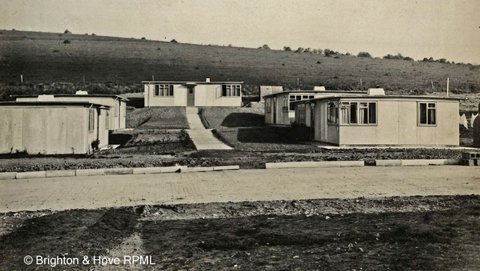
In 1945, the council began with temporary “prefab” houses on Heath Hill Avenue to get families out of cramped conditions. But the real transformation started in 1948, when the main estate was constructed rapidly to house the growing population.
Have you ever noticed a theme in our street names? If you live on Bodiam, Norwich, or Taunton, you are living in a street named after an English castle. It was a grand naming scheme for a humble council estate, perhaps designed to give the new residents a sense of pride in their new “castles.”
The Church in a Cowshed
One of the most touching stories of early community spirit in Bevendean is that of the “Barn Church.”
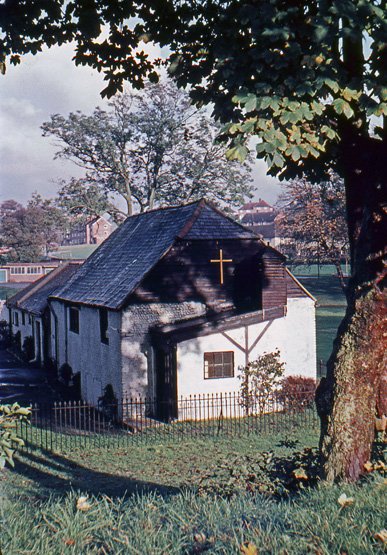
Before the Church of the Holy Nativity was built in 1963, the new residents didn’t have a place to worship. In 1953, they took matters into their own hands, converting a 16th-century cowshed from the old farm into a temporary church. The dedication was so popular that 120 people crowded inside, with many more singing hymns outside in the cold night air.
The permanent church that followed (designed by architect Reginald Melhuish) kept this community spirit alive until its closure in 2007. Today, the building serves a new purpose as a community base, proving that the building may change, but its role as a gathering place remains.
A Modern Pioneer: The Bevy
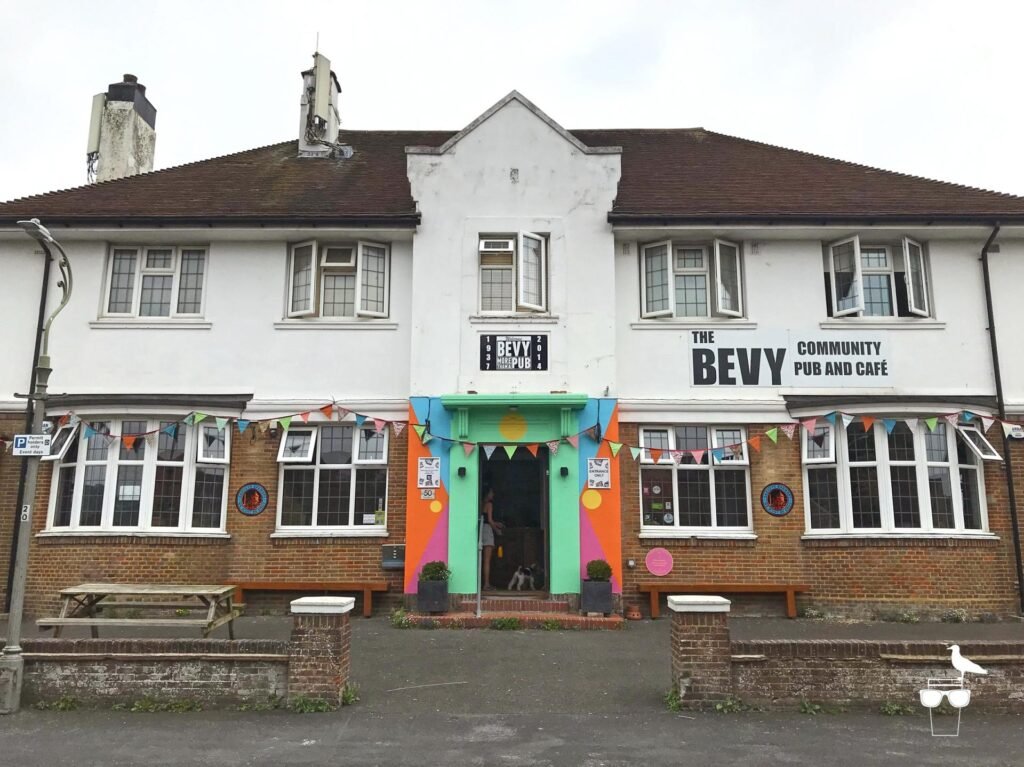
History in Bevendean isn’t just about the distant past; we are still making it. When the local pub closed down, the community refused to let it disappear. Reopened in December 2014, The Bevy became the first co-operative pub on a housing estate in the whole of the UK. It is a modern reminder that Bevendean has always been a place where people pull together to build what they need.
Living on the Green Edge
Despite the bricks and mortar, the “Green” in Bevendean has never really gone away. We are lucky to be flanked by Bevendean Down, a designated Local Nature Reserve that is home to rare butterflies like the Adonis Blue. It is a daily reminder that we are living on the edge of the magnificent South Downs, in a valley that has been cherished for over a thousand years.
Do you have photos of the estate from the 1950s or 60s? We are building a digital archive for the community. If you have old photos of the prefabs, the school, or the Barn Church, we’d love to host them here so they aren’t lost to time.
Image credits: https://www.bevendeanhistory.org.uk/